Frozen Pipe Repair in Northglenn, CO
A frozen pipe is two problems, not one. The first is obvious: no water at the tap. The second hides until the thaw — ice expands inside the line with enough force to split copper and galvanized pipe, and the split doesn't leak while it's still frozen solid. It leaks the moment the ice lets go. That's why a frozen pipe in a Northglenn home deserves a proper thaw and a full pressure check, not just a space heater and crossed fingers.
Front Range cold snaps set the trap. Temperatures can fall forty degrees between afternoon and morning, and wind pushes the cold deep into exterior walls, crawlspaces, and garage runs. Pipes in those zones freeze while the rest of the house feels fine — the kitchen sink on the north wall, the line feeding an upstairs bathroom, the stub to a hose bib that never got drained. One dead fixture while the others run is the signature.
Your provider's job is to find the frozen section, thaw it under control, and inspect the whole run as pressure comes back — because the ice often cracks the pipe in a different spot than where it froze. A thaw without that check turns a manageable freeze into a basement flood an hour later.
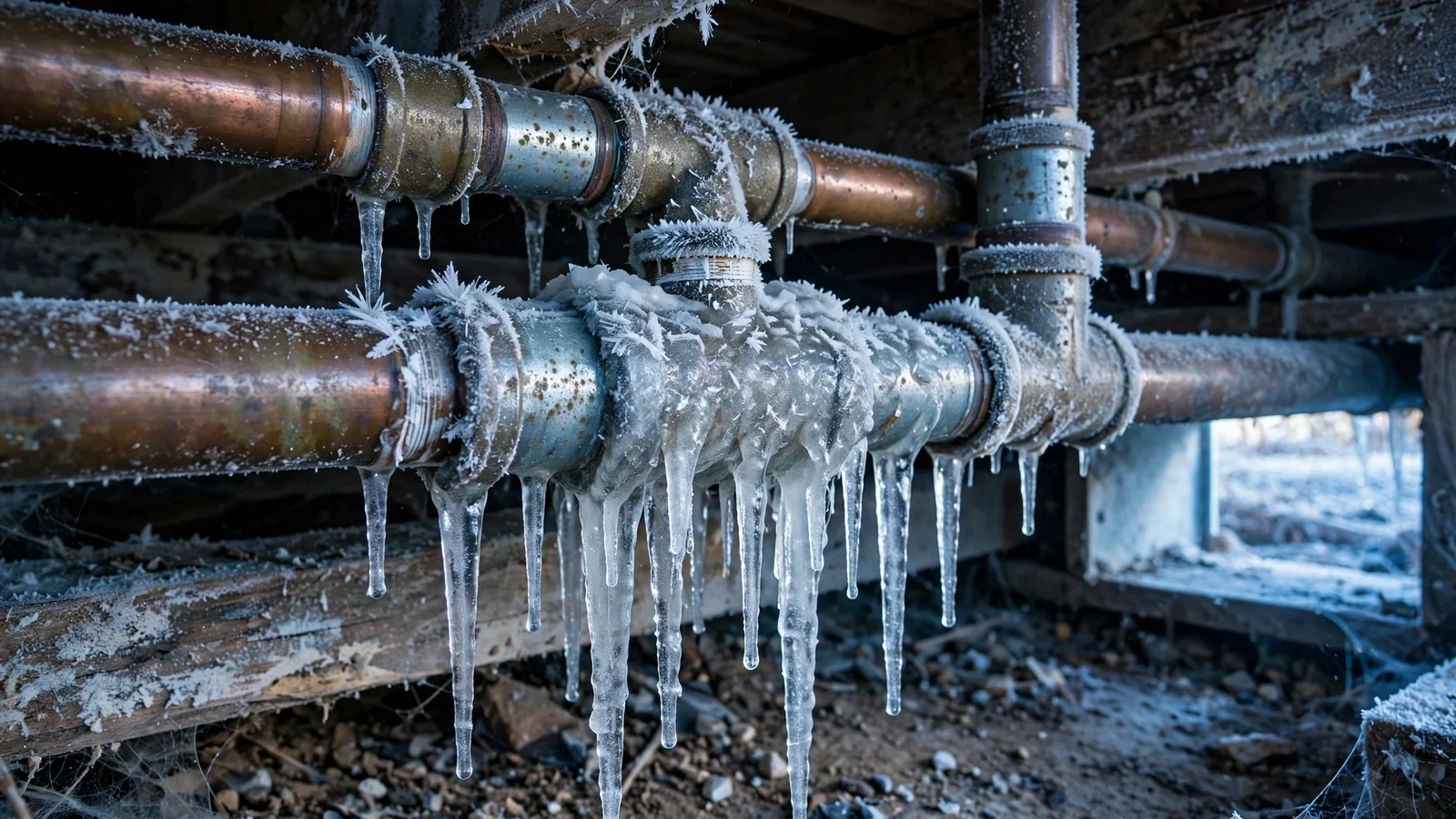
Signs a pipe is frozen
- Little or no water from one faucet after a cold night, while other fixtures still work
- Frost visible on an exposed pipe in the basement, crawlspace, or garage
- A section of pipe that looks swollen or bulged
- One room's plumbing completely dead while the rest of the house runs
- Strange odors from a drain or faucet — a sign the line is sealed off by ice
- An outdoor spigot that stopped working after the first hard freeze
How your provider thaws and checks a frozen pipe
1. Locate the frozen section
Your provider traces the line back from the dead fixture, checking the coldest runs first — exterior walls, crawlspace, garage — and uses touch, frost patterns, and the layout of the house to pinpoint where the ice is sitting.
2. Controlled thaw
Gentle, controlled heat is applied along the pipe — never an open flame — with the faucet left open so melting ice and built-up pressure have somewhere to go. The thaw works from the faucet back toward the frozen section.
3. Pressure check for splits
As flow returns, your provider inspects the full run under pressure. Ice expands and cracks pipe in spots that may be feet away from the freeze itself; those splits only show themselves once water is moving again.
4. Repair and prevention notes
Any split section gets repaired, and your provider points out what that run needs before the next freeze — insulation, a heat cable, or sealing the cold-air leak that's feeding the problem.
Frozen pipes in Northglenn homes
Northglenn's housing stock writes the script for frozen pipes here: 1960s and 70s ranch homes with basements, galvanized and early copper lines, and plumbing routed through basement ceilings and exterior walls. Galvanized pipe that's fifty years old is already narrowed inside by mineral buildup, which leaves ice less room to expand — those lines split sooner. Add the Front Range pattern of a mild day followed by a single-digit night, plus finished basements sitting under upstairs plumbing, and a frozen pipe becomes a water-damage event if it's handled casually. Local pros know which runs freeze first in these floor plans and where a split likes to hide.
Need frozen pipe repair in Northglenn?
One call connects you with a local technician. No forms.
(555) 234-5678📞 Call Now